Database Systems / USC Data Modeling
BAOLITE: PostgreSQL query engine optimization
A USC data modeling project and presentation exploring an ML-inspired join operator heuristic for PostgreSQL query planning.
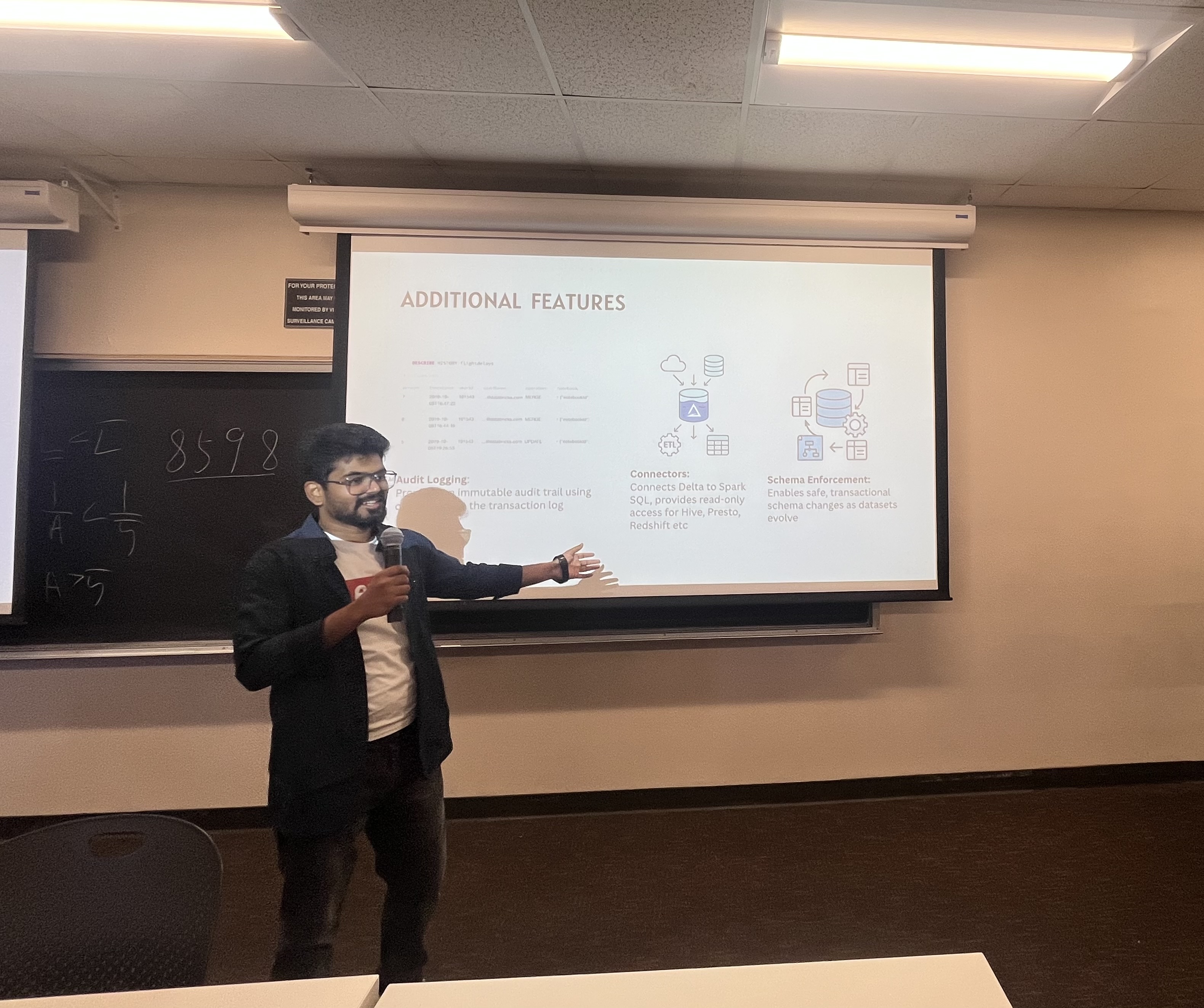
Why query planner internals matter
PostgreSQL performance is shaped by the planner's ability to choose efficient operators for a given workload. In a data modeling context, this becomes a practical systems problem: how do internal cost assumptions, join choices, and code-level planner behavior affect end-to-end query latency?
BAOLITE approached this from the inside of the database engine, combining internal PostgreSQL code changes with a project presentation focused on join operator heuristics and query engine optimization.
What we explored
- Join operator selection as a planner-level optimization target.
- Internal PostgreSQL code changes to reason about query engine behavior beyond surface-level SQL tuning.
- Benchmark-driven evaluation for understanding when a heuristic helps and when it can mislead.
- Database systems tradeoffs across explainability, maintainability, and performance.
Technical takeaway
The strongest lesson from this project was that database performance work lives below the query text. Indexes, schemas, and SQL rewrites matter, but planner internals and operator-level decisions are where small changes can cascade into large runtime differences.
Deep-dive artifact: view the BAOLITE presentation PDF.
React or ask a follow-up
Comments and reactions are powered by GitHub Discussions under the connectwithsajid brand.